The customer
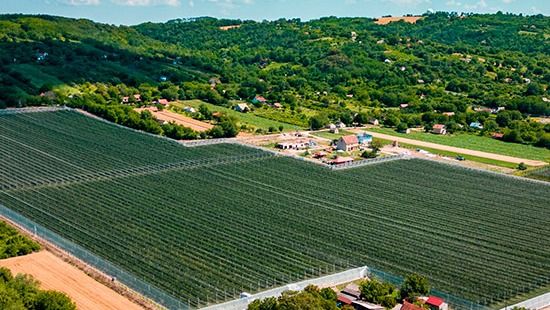
BMK Agrar grows early and proven cherry varieties in Slankamenački Vinogradi, between Fruška Gora and the Danube. The 17.5-hectare orchard has been planted since 2020, and production is certified to GLOBAL G.A.P. and GRASP.
Cherries do not wait: according to the company, the hydrocooler brings them down to 2 °C in less than 60 minutes from picking. So every step from the orchard to the cold store has to leave a record at once, not at the end of the day.
What was rolled out
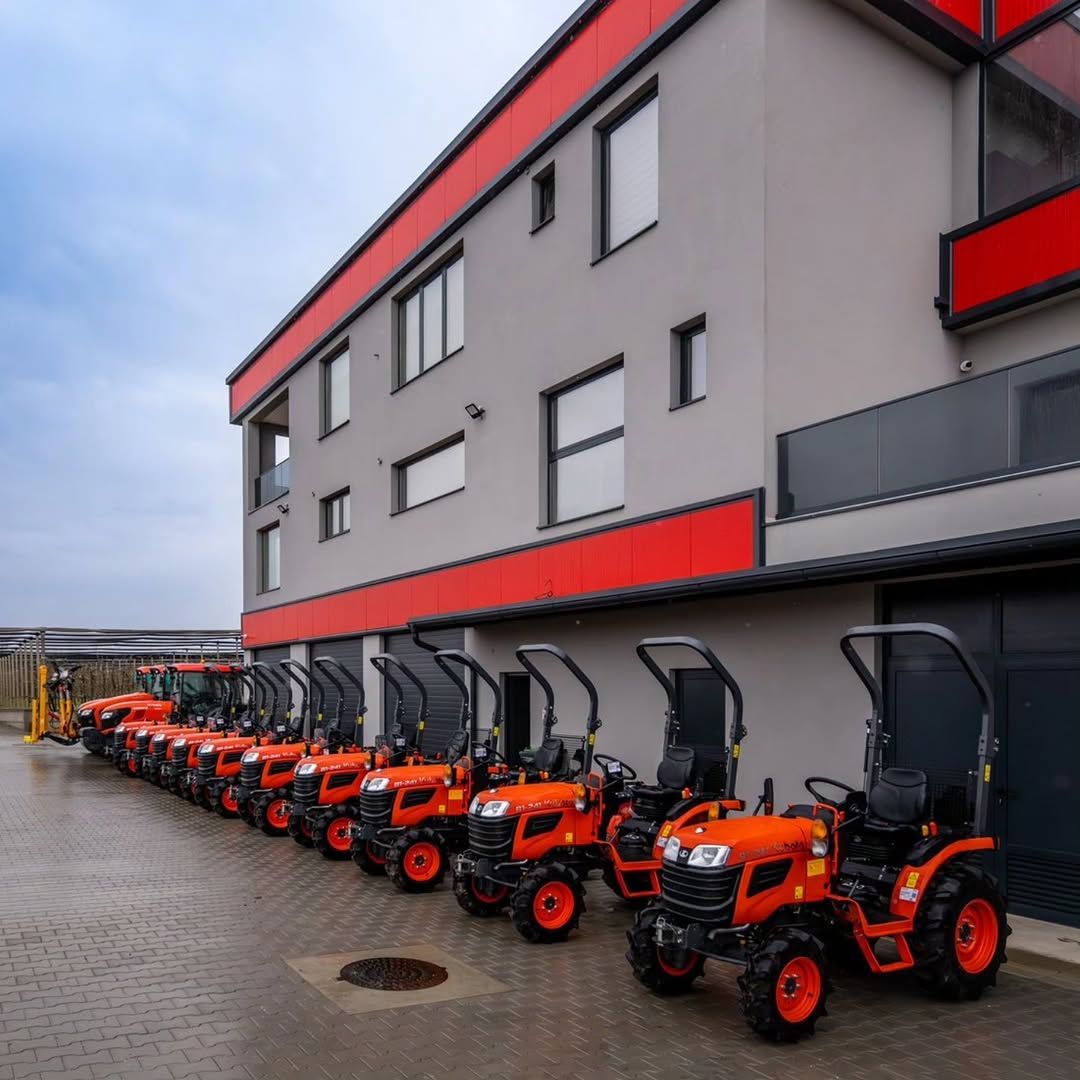
Pomonix carries the cherries’ whole path through the company, in production since June 2026. The server stands in the rack room on site, and the terminals and label printers are where the harvest is received, sorted, stacked on pallets and loaded. Workers sign in to the terminal by scanning the barcode on their card, and the terminal shows them only the jobs their role allows.
| Step | What the system does | What stays on record |
|---|---|---|
| Orchard row | 80×40 mm row label with a barcode | variety, planting year, number of trees |
| Harvest intake | gross weight, crates and rows; net is calculated automatically | harvest record with batch and rows |
| Hydrocooler | entry time and minutes remaining | marked “ready for sorting” |
| Sorting | input and output per variety | loss in kg and % |
| Pallet | size grade and net weight, pallet label | LOT and goods receipt into the store |
| Dispatch | pallet scan onto the transport order | who scanned and when, delivery note |
Each orchard row has its own label
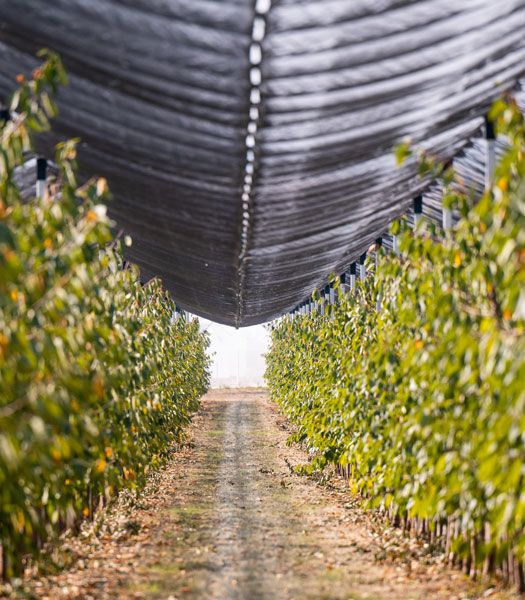
Every row in the orchard carries an 80×40 mm label with the barcode of its code, which is built automatically from the farm, parcel, block and row. In the system the row knows its variety, planting year and number of trees, so the harvest does not start from a piece of paper that says “third row on the left”.
Harvest intake: net is calculated automatically
A harvest is opened at the terminal by choosing the variety and parcel, and the crate label prints at once. At intake the warehouse worker scans that label and types in the gross weight, the number of crates and the rows. The system calculates the net itself: gross minus the pallet tare and the tare of each crate, using values set for the company.
The harvest batch is formed automatically, from the harvest date, variety, parcel and up to three rows the cherries were picked from. The harvest record also keeps the worker who opened the harvest and the warehouse worker who received it.
Hydrocooler and cold store
For every harvest in the hydrocooler, the entry time, the planned end of cooling and the minutes remaining are shown. After 40 minutes the harvest is marked “ready for sorting”, and the cold store list starts with the harvest that has been in the chamber longest. Chamber temperature and humidity are logged by hand, with a history of readings.
Sorting with loss per variety
A crate is added to sorting with a scan, and the input per variety is the sum of the net kilograms of those harvests. The output is entered for each variety, and the system calculates the loss in kilograms and as a percentage. After the season, it shows which variety lost the most at sorting.
The pallet gets its LOT at the terminal
The pallet takes the crop from the sorting in progress, and the warehouse worker picks the size grade and types in the net weight. The system assigns a LOT from the ISO week, the date and the size grade, for example 24-20260608-Krupan, and prints the pallet label. When the applied label is scanned, the pallet enters the store and the goods receipt is created automatically.
Dispatch: who loaded which pallet
The transport order carries the customer, destination, driver, vehicle and transport temperature. At loading, the warehouse worker scans every pallet onto the order, and the system records who scanned it and when. The order produces the delivery note and the pallet list as PDFs, in Serbian, English or German.
From the pallet on the truck, the trail leads back through the LOT and the sorting to the harvest batch, and from the batch to the variety, parcel and row.
Seasonal workers
The harvest needs many people at short notice. From a PDF of the ID card, the system reads the first and last name, address, ID card number and personal identification number; the contract is generated from the company template and kept as a PDF with the worker. Timesheets are entered for the whole team in one go, and the payout comes out as an XLSX sheet.